SOC 2 and ISO 27001 Compliance for Meeting Recording Vendors
Meeting recording vendors face stricter compliance demands than other SaaS products.
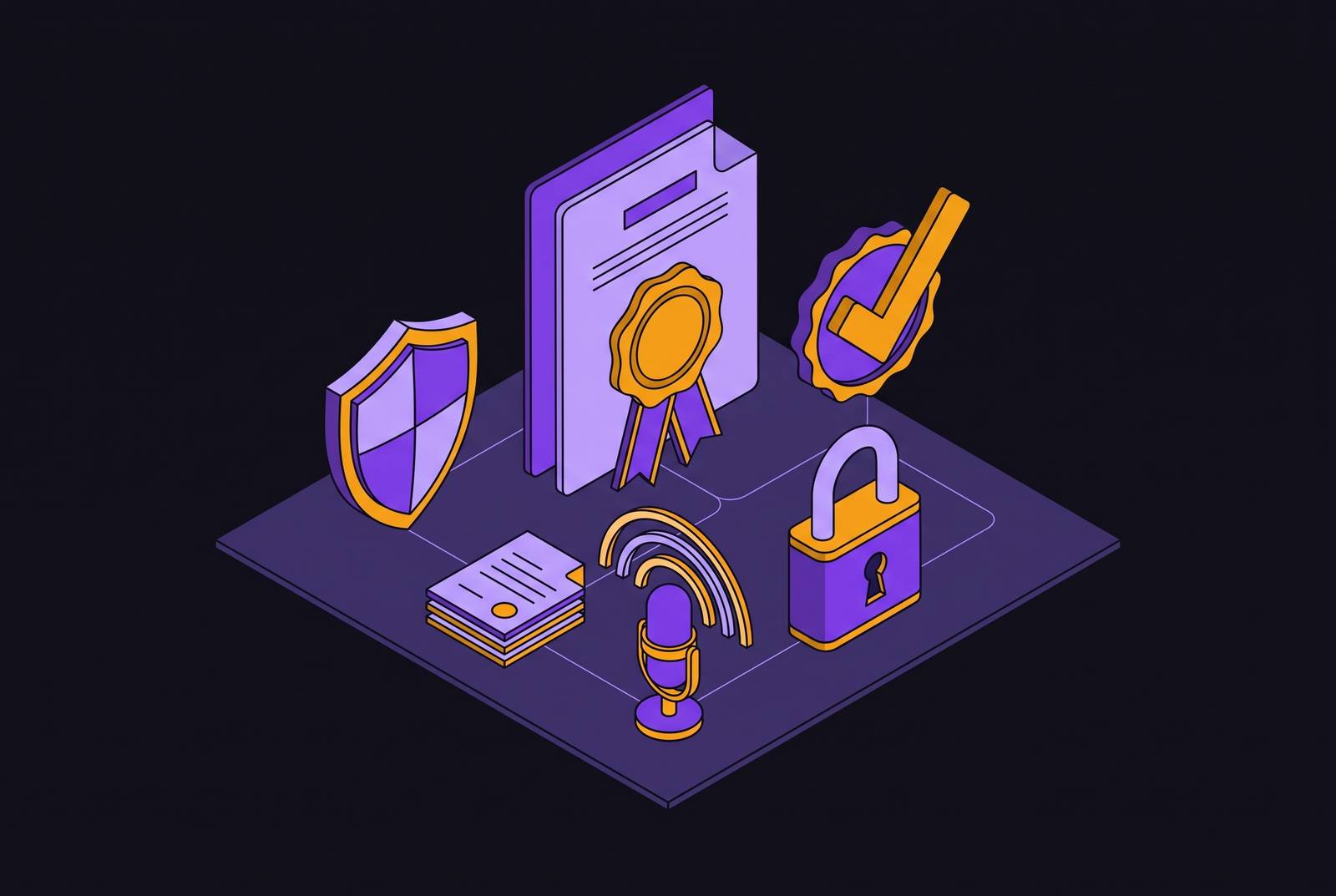
A meeting recording vendor sits in a different compliance position than nearly any other category of SaaS product, and the reason has nothing to do with marketing and everything to do with the content it touches. No document storage tool, CRM, or project management platform routinely ingests that kind of material, and that difference is why SOC 2 and ISO 27001 apply to this category with higher stakes than they do elsewhere.
The compliance scope follows the technical pipeline. Tools like Circleback, which layer AI summarization onto the meeting intelligence workflow, illustrate why this category demands dedicated scrutiny: the data moving through the system is a verbatim record of what people said, and regulators and auditors expect vendors to account for every step that record passes through, not just the ones that are easiest to certify.
What SOC 2 Certifies
SOC 2 tells a buyer how a vendor secures data while it's stored and in transit, who is permitted to access it, and whether those controls held up reliably over a defined period. It does not tell a buyer what the vendor actually does with that data once it has entered the system, and that distinction matters more for a meeting recording vendor than for almost any other SaaS category, because "what happens to the data" is the entire question when the data is a recorded conversation.
The report type matters in practice. The 2026 SOC 2 platform landscape confirms this: enterprise procurement has standardized on Type II, and a Type I report alone does not satisfy the requirements at most organizations evaluating a vendor for deployment.
The framework's biggest limitation for this category is its age. The operative standard remains the 2017 criteria with revised 2022 points of focus, supplemented only by nonauthoritative guidance in TQA 9561, published in September 2026. That guidance introduces one distinction that matters directly for this category: AI used in the services delivered to customers is treated differently from AI used only in internal processes. The transcription and summarization pipeline that defines a meeting recording product falls within the services-delivered-to-customers category, placing it squarely inside the examination.
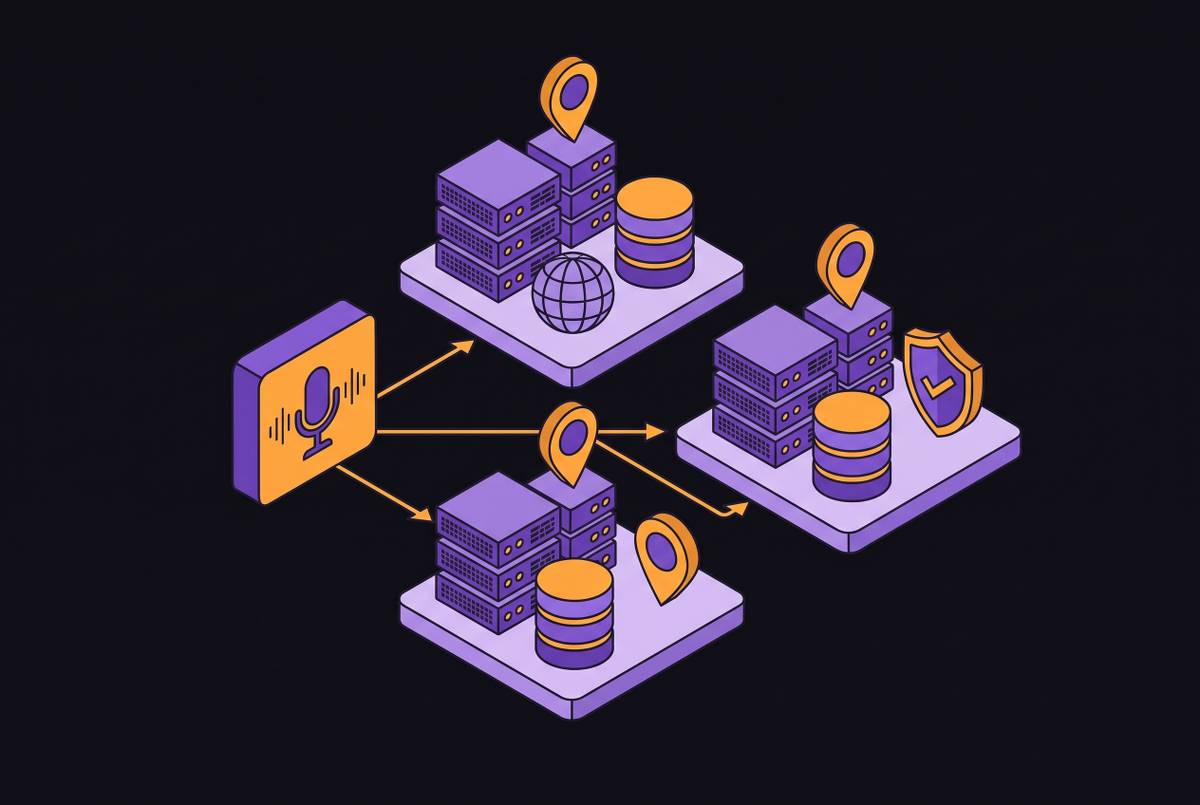
The subprocessor relationship is the most practically important gap in how SOC 2 applies here. If a vendor routes transcripts through a hosted LLM, whether from OpenAI, Anthropic, or another provider, that LLM provider is a subprocessor. It has to be analyzed the way any other subservice organization would be analyzed under SOC 2: either included in the scope of the examination or explicitly carved out, with the vendor's own controls documented at the handoff point where data leaves its infrastructure and enters the provider's. Meeting recording vendors need to care about this a lot, because summarization and action-item generation depend on exactly this kind of handoff. When a vendor like Circleback uses an external LLM service, that provider becomes a subprocessor, and SOC 2 examiners need to verify documented controls at that handoff, either including the subprocessor in scope or carving it out explicitly. That distinction shapes what a buyer can actually claim about the security of their meeting data, since a report that ignores the subprocessor relationship entirely is incomplete regardless of how strong the vendor's own infrastructure controls are.
ISO 27001's additions beyond SOC 2
ISO 27001 is a different kind of instrument than SOC 2. Rather than auditing specific controls at a point in time, it certifies that a vendor has built and continuously operates a documented Information Security Management System, with a defined scope, an ongoing risk-treatment process, and regular internal reviews. ISO 27001 is a certification of structural commitment rather than a snapshot of controls, and the two frameworks are complementary.
EU buyers increasingly make it a contractual condition of doing business, and auditors now treat ISO 27001 as the global enterprise standard alongside SOC 2 for finance-sector and EU-market deals. Annex A's supplier management controls (5.19 through 5.23) require documented risk assessments of third-party providers, so if a vendor is certified, it has to maintain and produce evidence of how it assessed and contracted with its LLM providers. ISO 27001's Annex A controls on supplier relationships and contractual obligations carry particular weight for vendors that depend on third-party LLM services, since conversations handled by these tools often include personnel matters, client disclosures, or competitive strategy, and ISO 27001 is the framework auditors expect to see governing those third-party relationships.
You should also know ISO/IEC 42001:2023, published in December 2023, because it governs AI management systems specifically. A SOC 2 or SOC 2+ report does not substitute for ISO 42001 certification; they are distinct engagements. If you are evaluating a vendor's AI-specific governance, ask directly whether the vendor has pursued 42001 in addition to 27001.
The specific controls that matter most for vendors who record conversations
A meeting recording vendor's compliance posture is only as strong as the controls governing its highest-risk processing steps, and for this category those steps are audio capture, transcript storage, LLM routing, and downstream data sharing. Everything else in a compliance program supports those four points.
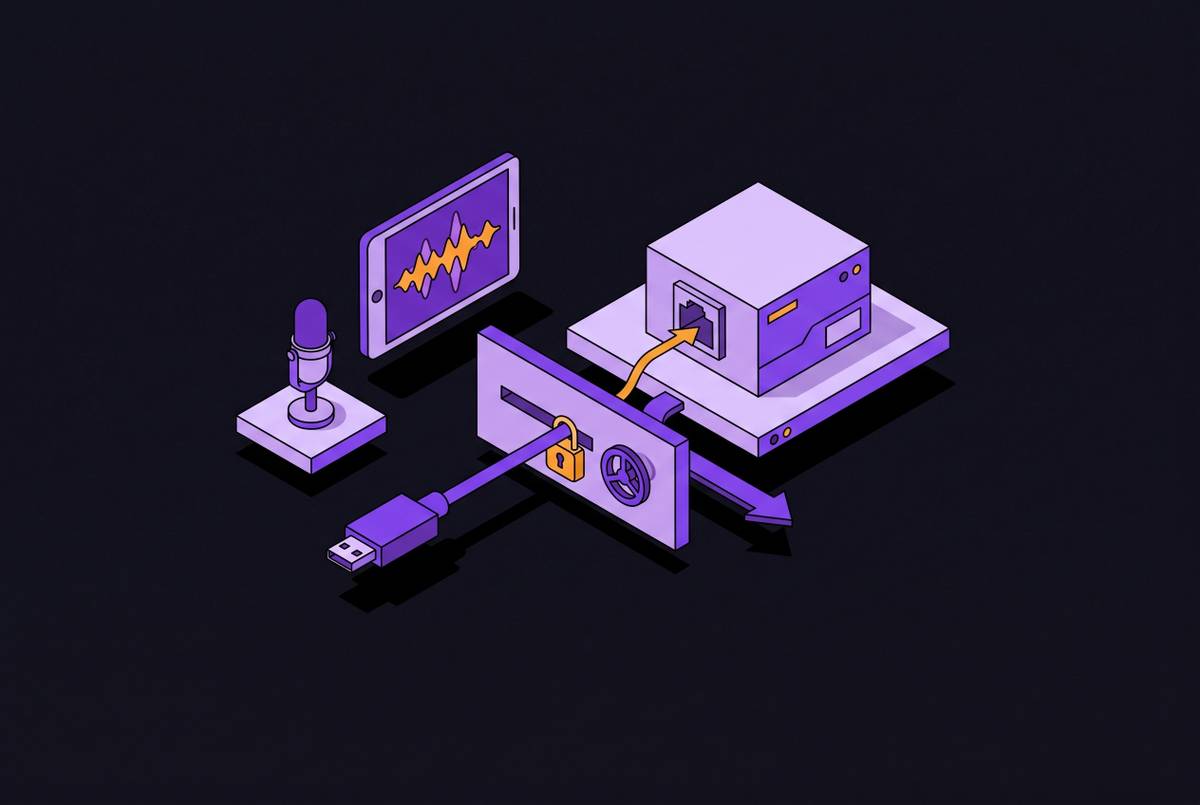
Encryption is the baseline expectation. The AICPA does not mandate specific algorithms, but the practitioner-accepted baseline is AES-256 or equivalent for stored recordings and transcripts, and TLS 1.2 or higher for all transmission. This isn't a box an auditor checks by reading a policy document. AI-powered compliance platforms now validate TLS configurations and certificate management directly as part of automated CC6.x evidence collection, so the test checks your systems, not your paperwork.
Access control follows a similar logic. Separation of duties is a related, specifically tested control: auditors look for evidence that the person configuring data retention settings is not the same person who can export customer data.
Incident response procedures carry extra weight here, because of what has to be disclosed if something goes wrong. For meeting data, this includes breach notification obligations, which may trigger GDPR's 72-hour reporting window if the recordings involve EU residents, so the incident response plan has to work as a live operational requirement, not sit as a document in a drawer.
Subprocessor and vendor risk management is the control area most specific to this category. A no-training policy only covers the vendor's own systems. If customer data is actually protected from exposure to an LLM subprocessor, it's because of contractual zero-retention terms negotiated with each provider, so auditors test the contract language itself, not the policy page that summarizes it.
Finally, continuous monitoring and point-in-time evidence are not the same thing. A vendor that monitors continuously throughout the year produces more defensible evidence than one that assembles a snapshot in the weeks before an audit begins.
Structural Gaps in SOC 2 and ISO 27001 for AI Meeting Tools
Both frameworks certify how data is stored and who can access it. Neither, in its current form, governs what a model does with the data once it has been ingested. Prompt injection resistance, training-data leakage, model hallucination, and notification when a vendor swaps the underlying model all sit outside the scope of either audit.
The most consequential gap concerns AI training. You have to check the vendor's Data Processing Agreement separately to verify whether customer data is contractually excluded from training a model, and that DPA language has to extend to every LLM subprocessor the vendor uses, not stop at the vendor's own infrastructure.
The AICPA's own guidance acknowledges this gap. As of October 2026, there are no AI-specific Trust Services Criteria, TQA 9561 remains nonauthoritative, and a forthcoming criteria revision, described by KPMG as expected to include new or enhanced AI considerations, has no announced effective date. So if you're a buyer evaluating a vendor today, you can't assume any current SOC 2 report addresses AI-specific risk, because the standard that would require it doesn't exist yet.
A related and more concrete gap appears in how some vendors structure pricing around compliance itself. If a vendor holds SOC 2 Type II certification but gates Business Associate Agreement availability to its highest pricing tier, healthcare buyers have a real problem, since they need HIPAA coverage no matter which tier they've purchased. A vendor can be fully certified and still structurally unavailable to the buyers who need its compliance posture most.
ISO 42001 addresses part of this picture by documenting AI risk treatment, model governance, and bias monitoring as its own area of certification. Most vendors in the meeting recording category have not pursued it, so you should ask specifically whether a given vendor holds it rather than assume SOC 2 or ISO 27001 already cover this ground, because they don't.
Consent and Recording-Visibility Obligations on Top of the Frameworks
SOC 2 and ISO 27001 govern data security. Neither governs whether a recording was lawfully collected in the first place, so a vendor can hold full SOC 2 Type II certification and still expose its customers to wiretapping liability if the consent architecture around the recording itself is wrong.
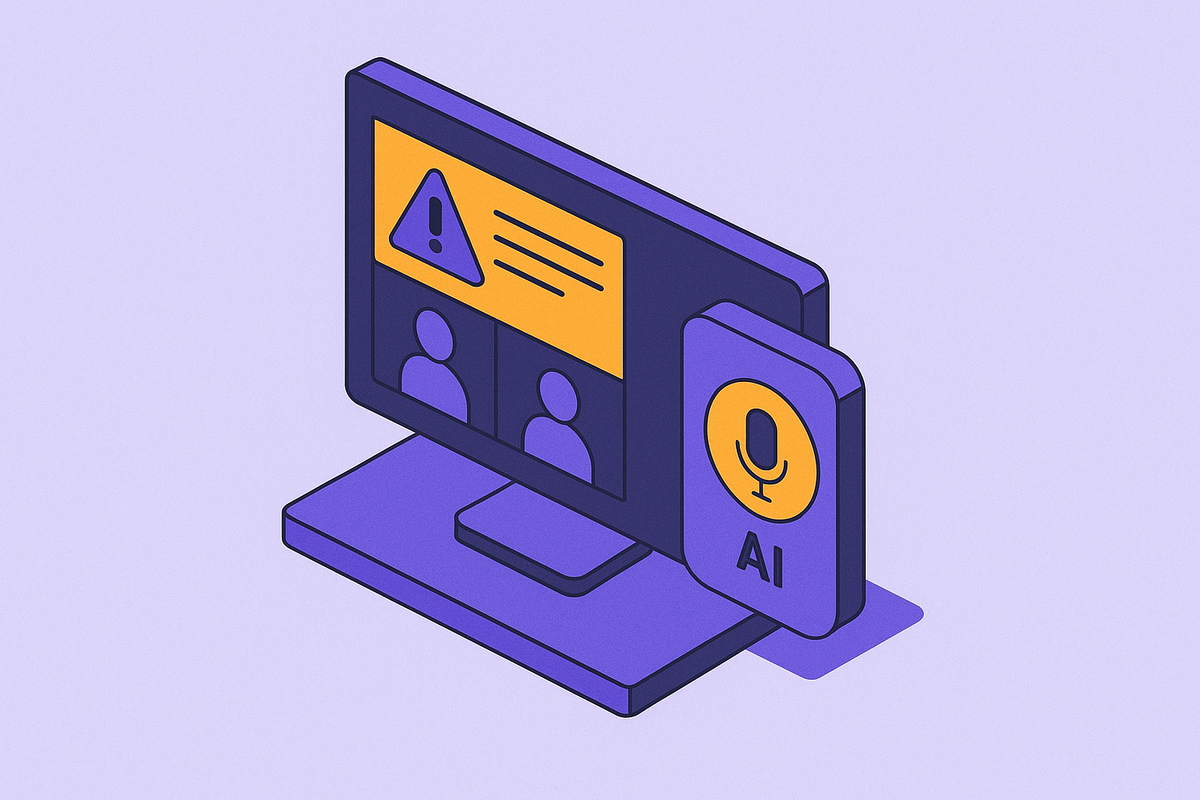
The architecture decision is both a technical one and a legal one. No jurisdiction currently treats the visible presence of a recording bot in a participant list as legally sufficient notice on its own. Consent requires informed agreement covering what is being recorded, how it will be used, who will have access to it, and how long it will be kept, and a bot icon in a participant list satisfies none of that on its own.
Professional-services contexts raise the bar further. The New York City Bar's Formal Opinion 2025-6 concludes that lawyers must notify clients and get consent before recording with AI-enabled tools, and that undisclosed recording violates the duty of loyalty and Rule 8.4's prohibition on deception. So professional-services buyers carry obligations that exceed anything a compliance framework imposes on the vendor itself, because the lawyer's duty to the client exists independent of what the vendor's SOC 2 report says.
The legislative backdrop is moving quickly enough that this is not a settled area to check once and forget. As of April 2026, AI-related bills had been introduced across the vast majority of US states, with dozens of new AI laws adopted in 2025 alone, and New York's proposed S5077 would expand the list of all-party consent states. For a buyer, the consent architecture a vendor builds, whether it defaults to a visible bot, a silent desktop capture, or a configurable choice between the two, belongs in the compliance evaluation alongside the audit certificate, not as an afterthought handled separately by legal counsel.
What enterprise procurement should require from a vendor
A compliance badge on a vendor's website is not a procurement document, and treating it as one is the single most common mistake in evaluating a meeting recording vendor. Enterprise buyers should require three specific artifacts before deploying any such tool: the full SOC 2 Type II audit report itself, not a marketing summary or a badge image; a signed Data Processing Agreement that explicitly prohibits customer data from being used to train AI models; and a named list of LLM subprocessors with written confirmation of zero-retention terms for each one.
Beyond those three documents, you should ask the vendor direct questions. Ask which Trust Services Criteria are actually in scope for the vendor's SOC 2 report, because if a report stops at Security without including Confidentiality and Privacy, it tells you far less than it appears to. It asks who conducted the audit and whether that firm is AICPA-accredited, since the credibility of a SOC 2 report depends entirely on who performed it. It asks for the vendor's subprocessor list for AI processing specifically, along with each provider's own SOC 2 or ISO 27001 report, so you can trace the chain of custody for conversation data. And ask how speaker diarization is implemented and whether it generates or stores voiceprints that might trigger BIPA obligations, because this is a control detail easy to overlook until a regulator or plaintiff's attorney raises it.
Circleback treats these requirements as foundational rather than as features layered on after launch, building privacy and security controls as prerequisites for handling sensitive conversation data and giving teams the ability to configure recording visibility and consent behavior across different meeting contexts.
Compliance Posture in Choosing a Meeting Recording Vendor
Certification functions as a signal, not a guarantee. A vendor holding SOC 2 Type II and ISO 27001 has made specific, auditable commitments and demonstrated, through an independent examination, that it met them over time. If a vendor's compliance story begins and ends with a privacy policy page, it has made promises that no independent party checked.
A vendor's compliance posture is best judged by how it responds to the harder questions, and vendors that gate HIPAA coverage to premium pricing tiers, cannot produce a named LLM subprocessor list on request, or answer DPA questions by linking to a general privacy policy are revealing, often without meaning to, exactly where their compliance investment stopped.
What these frameworks cover and what AI meeting tools actually need still diverge, but the gap is narrowing. The AICPA is expected to revise its criteria to add AI-specific considerations to SOC 2, and ISO 42001 already gives you a certification path built just for AI management systems. Buyers evaluating vendors now should ask not only about current certifications but about roadmap commitments to these emerging standards, since the vendors preparing for that shift today will be the ones ready when it arrives.
For any team handling sensitive conversations, sales calls carrying client disclosures, executive strategy sessions, customer success calls touching personal data, legal or clinical conversations bound by professional duties, the compliance question is whether that vendor's architecture, contracts, and consent design would hold up if the recorded conversation were ever subject to legal discovery, regulatory review, or a breach disclosure. You should apply that standard before any of these tools touch a single real conversation.