Meeting AI Security Risks in Regulated Industries
Recording meetings in regulated industries creates legal exposure that goes far beyond note-taking.
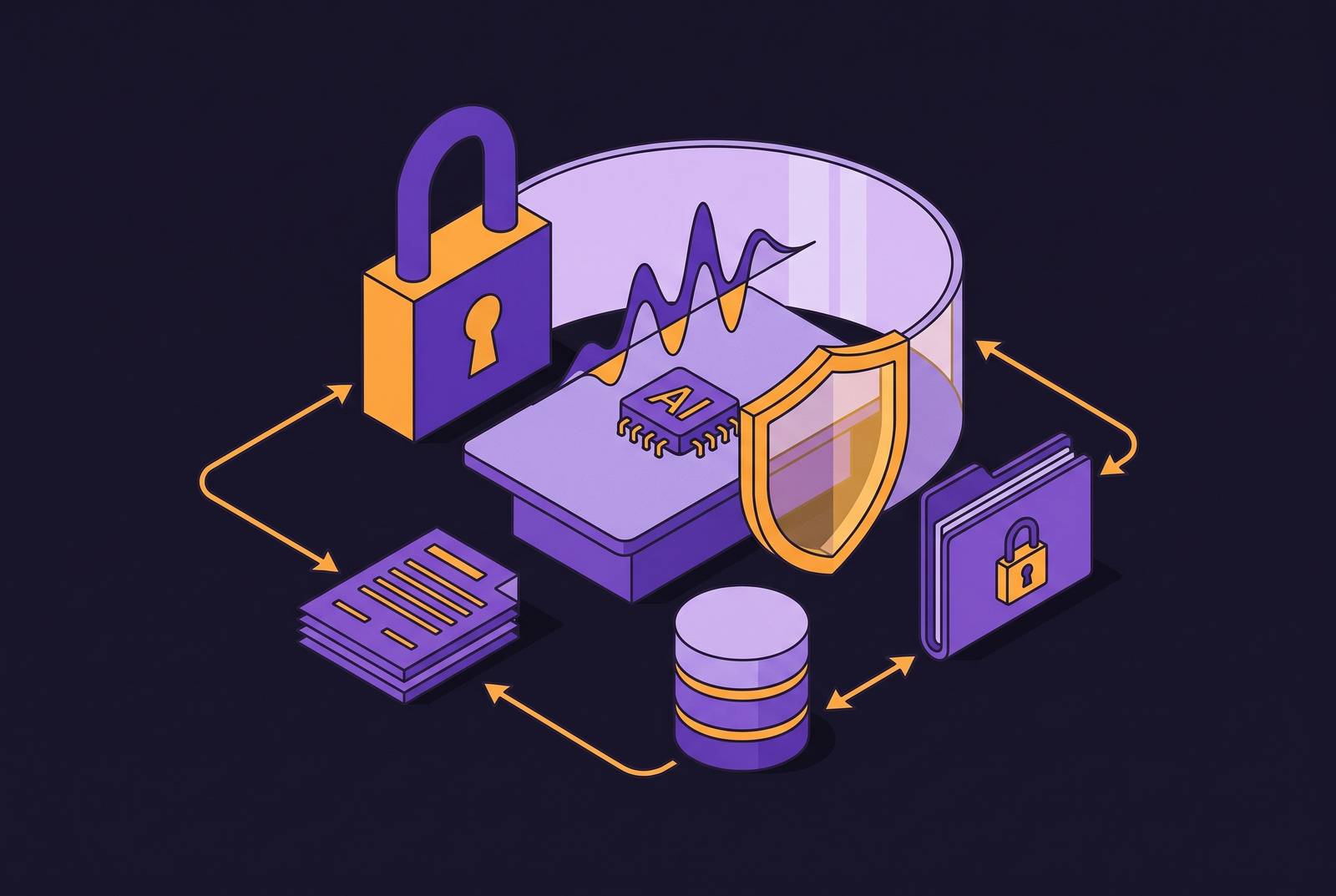
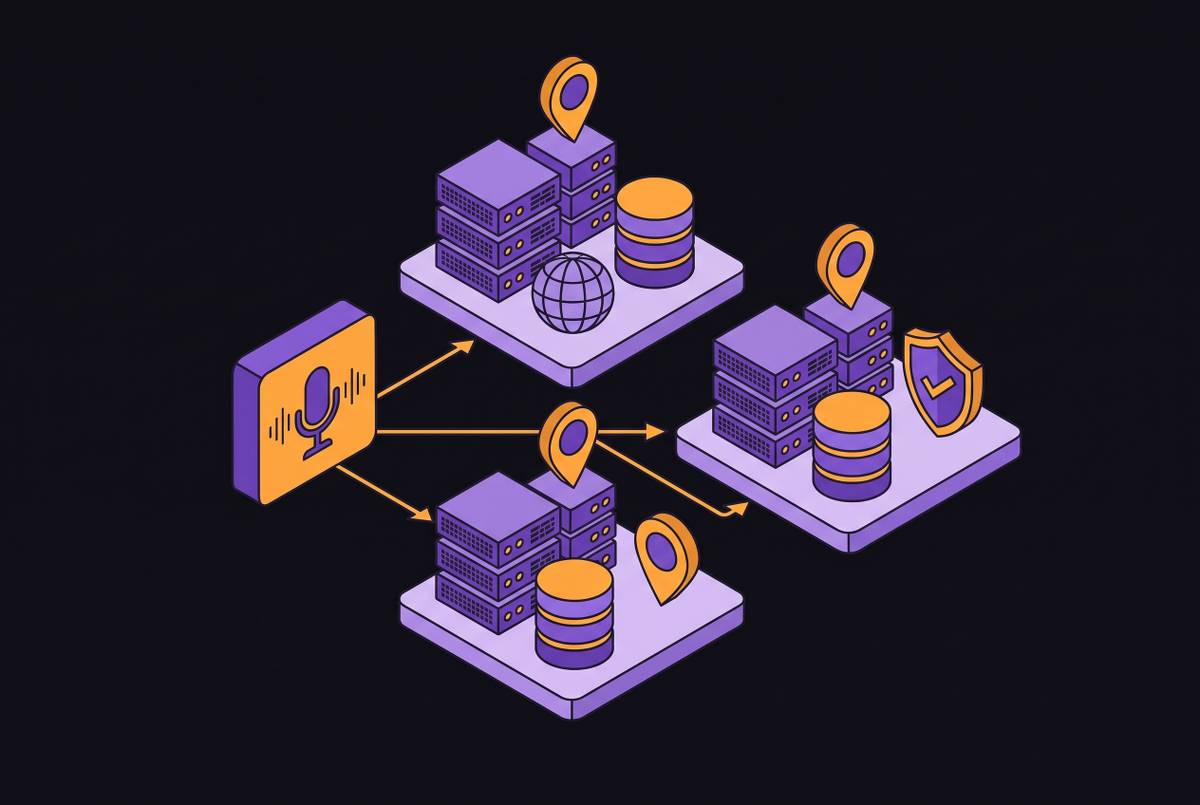
When a regulated organization lets an AI tool record a meeting, it has made a data governance decision with legal consequences, not a workflow choice about note-taking. That distinction is the subject of this piece, and it matters because financial services, healthcare, and legal organizations now encounter these tools constantly, whether deployed internally or carried in by a client, vendor, or counterparty over whom the organization has no control. A single call can seat participants across several jurisdictions, each governed by different rules on recording and data processing, so legal exposure multiplies with every cross-border meeting.
What makes this a governance failure rather than a mere compliance gap is what the tool does to the conversation itself. What stays faithful to a recording's original purpose or drifts into something else is set by the decisions made at the moment of capture, not by whether a meeting gets recorded. Platform behavior has started to catch up with this reality: Google Meet began flagging third-party notetaker bots as a potential risk in March 2026, and Microsoft Teams rolled out a comparable mechanism around the same period, each forcing a host to manually admit a bot before it can join. That shift is a symptom of the underlying problem, not a fix for it, and the sections that follow trace how the risk plays out differently across healthcare, financial services, and legal practice.
The shared risk mechanisms that apply across all regulated sectors
Before the sector differences matter, several structural failure modes apply to every regulated organization using these tools, regardless of industry. Most platforms place the burden of obtaining consent on the account holder rather than on the system itself, so one participant can trigger recording and transcription without the others' knowledge or agreement. A bot can sit visibly in the participant list, but that does not satisfy legal consent requirements in any jurisdiction that demands explicit disclosure, no matter how obvious its presence seems to whoever added it.
White & Case's alert notes that in any dispute or investigation, those discrepancies can undercut credibility or raise unresolved questions about which document is authoritative. These shared mechanisms form the floor. What each sector adds on top is a distinct regulatory or evidentiary consequence, and that is where the risk actually gets sorted out.
Healthcare: where HIPAA compliance and state wiretapping law create two separate gates
A healthcare organization that has secured HIPAA compliance from its AI meeting vendor has cleared one regulatory gate while leaving a second, entirely separate gate wide open: state wiretapping and eavesdropping law. HIPAA is a federal framework that governs the disclosure and security of patient records. It says nothing about whether it was lawful to start recording a live conversation in the first place, a question controlled instead by state-level wiretapping, eavesdropping, and privacy statutes, even though HIPAA still governs how any resulting recording containing protected health information must be stored, handled, and disclosed afterward.
A Business Associate Agreement does not let a clinician record a patient who does not know about it. That gap turned from theoretical to actual in early 2026, when major healthcare systems including Sutter Health and MemorialCare faced class-action lawsuits because they used AI scribes without explicit patient consent in all-party consent states including California. Consent rules vary meaningfully from state to state: some require only one party to agree to a recording, others require every participant to consent, and a telehealth platform serving patients across state lines has to satisfy the most restrictive rule in play on any given call, not the most convenient one.
"HIPAA-compliant" on a vendor's website is a narrower claim than it sounds. It describes the vendor's handling of protected health information. It does not describe whether recording a particular patient in a particular state was lawful in the first place, and a BAA is a necessary piece of using a cloud tool with patient data without being sufficient on its own; it has to be paired with a consent protocol built around the most restrictive state law touching any participant on the call. A further complication arrives when a tool processes voice in a way that creates a biometric identifier, such as a voiceprint used for speaker identification. When that happens, Illinois's BIPA and comparable state statutes can apply on their own terms, whether or not HIPAA requires it.
Financial services: how Regulation S-P makes cloud transcription a disclosure event
When a registered investment advisor uploads a client meeting recording to a cloud transcription service, that upload likely counts under Regulation S-P as a disclosure of nonpublic personal information to a nonaffiliated third party. Most advisors have not mapped that obligation onto their current AI tool use, so many are already out of compliance without ever having decided to be.
Regulation S-P requires every SEC-registered investment adviser, along with broker-dealers, investment companies, funding portals, and transfer agents, to maintain written policies protecting customer records and nonpublic personal information. In January 2026, the SEC's Division of Examinations published its 2026 Examination Priorities, and it flagged AI tools used in client-facing interactions as an area of heightened scrutiny for registered investment advisors. Most firms have not updated their Form ADV Part 2A privacy notices to disclose that client meeting audio now gets uploaded to AI transcription services, so that gap is already a compliance violation, not just a hypothetical risk.
Fiduciary duty adds an obligation that sits apart from Regulation S-P itself. If the transcription vendor suffers a breach six months later, all of that sits among the exposed records, so the advisor faces mandatory SEC reporting and client notification obligations triggered by a vendor's security failure, not anything the advisor did directly. A breach anywhere in that vendor's system exposes every advisor who uploaded client audio to it, which turns a single vendor incident into a multiplied regulatory event across an entire client base.
Legal: how third-party transcription can waive attorney-client privilege
Recordings of legal conversations transcribed by a third-party AI service can waive attorney-client privilege where the vendor's terms authorize data access by parties outside the attorney-client relationship. That waiver, once it happens, cannot be undone, which sets this risk apart in kind from the regulatory exposure in healthcare or financial services: a HIPAA violation or a Regulation S-P gap can be remediated going forward, but a privileged communication that has been disclosed stays disclosed.
Attorney-client privilege protects confidential communications a lawyer and client make to obtain legal advice, and if it goes to an unnecessary third party, that protection is generally gone for good. White & Case notes that machine transcripts may capture side comments and informal remarks a traditional set of minutes would have left out, though AI summaries can still misstate or oversimplify the points that actually mattered. Many AI platforms store or train on transcript content under contractual terms that make no accommodation for attorney-client or work-product protections, and processing privileged material through such a platform can produce inadvertent waiver even where no one intended to disclose anything.
The e-discovery dimension makes the exposure worse. Without deliberate governance, an organization is no longer managing a single minutes document but a sprawling ecosystem of recordings, transcripts, AI summaries, decks, and conventional minutes, each independently discoverable. Retention decisions then close the trap from both directions: deleting AI-generated transcripts can violate litigation hold requirements, while retaining them creates permanent discoverable material out of conversations that would, before these tools existed, have left no written record.
The EU AI Act adds a compliance layer that cuts across all three sectors
For organizations operating in the EU, AI meeting tools used for worker monitoring or recruitment can qualify as high-risk AI systems under the EU AI Act, a classification that layers obligations on top of whatever sector-specific regulation already applies in healthcare, finance, or legal practice. AI notetakers deployed for recruitment or for employee monitoring and evaluation may fall under Annex III of the Act as high-risk systems, and that classification brings requirements for system monitoring, log retention, and human oversight that apply in addition to GDPR and any sector rule, not in place of them.
Full enforcement for Annex III high-risk systems begins December 2, 2027, so if an organization has not yet assessed whether its meeting AI qualifies, it needs to do that now. The CLOUD Act and GDPR conflict reappears here in sharper form: a US-based cloud service can be compelled to produce data under the CLOUD Act even when that data was generated entirely within Europe, placing it in direct tension with GDPR and creating serious legal exposure for healthcare and finance organizations serving EU data subjects. None of this replaces the sector-specific analysis already laid out for healthcare, finance, and legal; it sits on top of it, and for any organization with EU operations or EU clients, it has to be assessed alongside those sector obligations.
Governance framework requirements before deployment in regulated contexts
Deploying these tools responsibly in a regulated industry requires addressing five categories of governance decision that most organizations have not yet formalized, and those decisions need to happen before deployment, before an incident forces the question. Meeting-type classification comes first: not every meeting carries the same risk, and clinical consultations, attorney-client calls, and M&A discussions warrant categorical exclusion from AI capture regardless of what other controls are in place. A governance framework has to state which meeting categories are in scope for AI capture and which are excluded, rather than leaving that judgment to whoever happens to be hosting the call.
Vendor due diligence comes second, and it means reading the terms of service and privacy policy for language on model training use, third-party sharing, and retention periods, and confirming whether the vendor will execute a BAA for healthcare use or a data processing agreement for GDPR purposes. Retention and deletion policy follows directly from the legal issues already discussed: AI-generated transcripts may count as business records subject to retention and legal-hold obligations, so an organization needs defined retention thresholds, automatic deletion configured where appropriate, and settings compatible with litigation hold requirements set deliberately to match those obligations. Access control is the fourth piece: a clear answer to who can view transcripts and summaries, role-based permissions that limit access to actual meeting attendees, and real limits on how broadly sensitive discussions, employee reviews, legal strategy, patient consultations, circulate inside the organization.
Governing use rather than banning it outright is the dominant position among practitioners handling this question, and for good reason: providing an approved, enterprise-grade alternative measurably reduces unauthorized AI usage, because employees who have a sanctioned tool have less reason to reach for an unsanctioned one. Governance beats prohibition for most meeting categories. That approach has a real limit, though. Certain categories in healthcare and legal practice carry risks, inadvertent privilege waiver, biometric data collected from a non-consenting participant, that no consent architecture fully resolves, and for those categories, categorical exclusion is the only defensible position. A sound framework states that distinction openly: governed use for the broad majority of meetings, and categorical exclusion for the small set of categories where the downside is irreversible.
Tool architecture and risk profile in regulated settings: bot-based versus botless
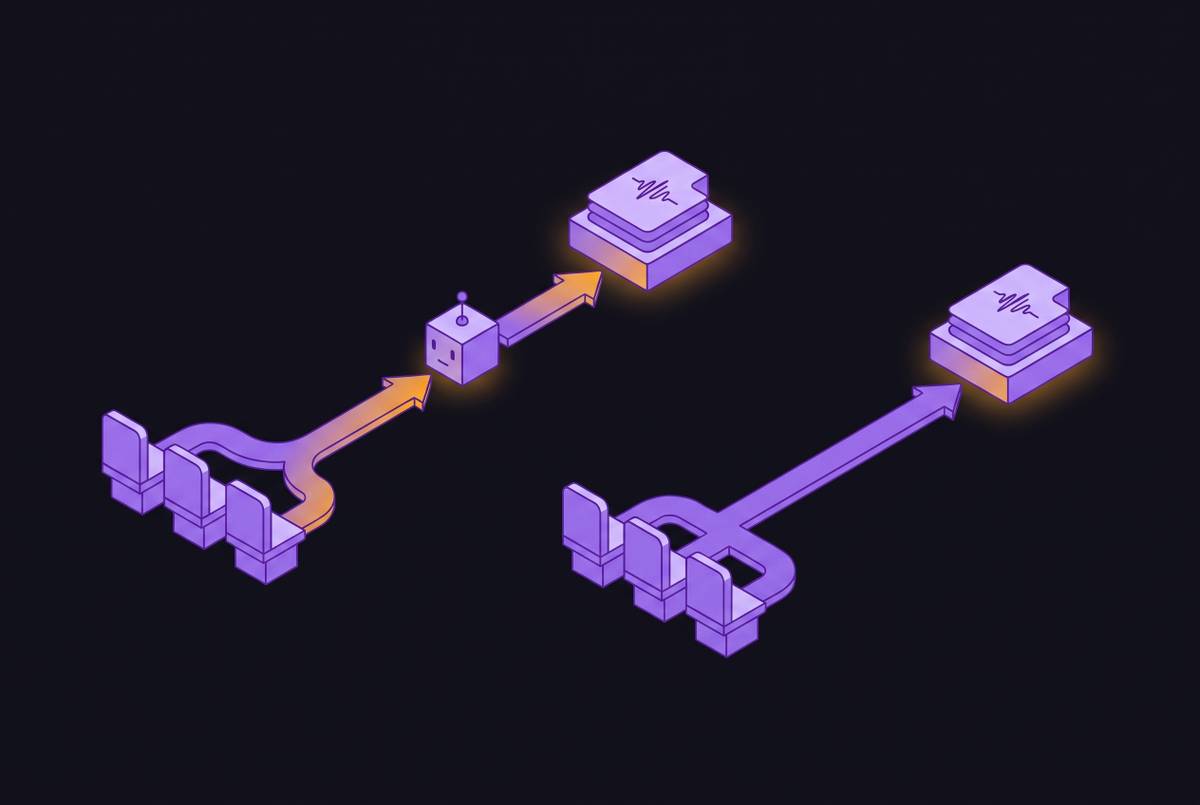
Whether a tool joins a call as a visible bot or captures audio silently at the system layer is a compliance decision in a regulated industry, not a matter of user preference, because each architecture routes data differently and creates a different consent and audit surface. For an advisor, clinician, or attorney asking how to get AI meeting notes without a bot joining the call and alarming a client, the architecture choice is also the governance choice: botless tools capture audio locally on the device rather than through a third-party participant in the meeting, which changes both what gets transmitted and who needs to be notified.
Bot-based tools join as a visible participant in the call, and that presence is observable, but it does not amount to legally sufficient consent in any jurisdiction that requires explicit disclosure. Botless tools capture audio locally at the system layer, so no bot ever appears in the participant list, and that removes the visual cue entirely, so the meeting organizer has to make sure every participant has been affirmatively notified some other way. In a regulated setting, that manual-admit step becomes an additional point where consent needs to be documented, not just a minor UI friction.
Neither architecture removes the underlying need for explicit consent, but each distributes that obligation differently, so a regulated organization needs to know which model its chosen tool uses before it decides what its consent protocol has to cover. Evaluating a tool for this kind of setting means checking for published compliance certifications that match the sector: SOC 2 Type II at a minimum, HIPAA BAA availability for healthcare, and data processing agreements compatible with GDPR for any organization with EU-facing clients. Circleback is one tool built around this flexibility: it supports both bot-based and botless, silent desktop recording, covers more than 100 languages, and integrates directly with CRMs and workflow tools, which lets a regulated organization match the capture method to the meeting type rather than applying one architecture to every call, and routes meeting data into governed internal systems rather than leaving it to live solely inside the vendor's cloud. The tool matters less than the decision behind it: regulated organizations that choose their architecture deliberately, rather than by default, are the ones positioned to show a regulator or a court that the choice was governed from the start.