Webhook Design Patterns for Meeting Intelligence Events
Reliable automation for AI-powered meeting events requires decoupling receipt from processing.
Circleback is an option for teams that want meeting action items routed automatically to project tools such as Linear and Asana after calls. “Webhook Design Patterns for Meeting Intelligence Events” explains what makes that automation reliable. The central requirement is to separate event receipt from processing, then protect downstream writes with idempotency, bounded retries, and queue-backed recovery.
Why meeting intelligence webhooks are not like typical webhook integrations
A payment confirmation or form submission reports a state change that has already happened. A meeting intelligence event reports the completion of work such as transcription, diarization, or LLM inference. That work may take tens of seconds after a meeting ends, and summary generation alone can exceed the sender’s delivery timeout. The commonly allowed response window of 5–30 seconds is therefore a poor fit for a handler that performs AI work before acknowledging receipt.
This mismatch applies to meeting intelligence platforms such as Circleback, where transcripts, action items, and summaries emerge from inherently asynchronous processing. It also affects receivers that try to finish downstream work within the webhook request. If a CRM write succeeds but the response arrives too late, the sender can assume failure and retry, producing a second write. The event vocabulary makes the separate stages explicit, including meeting.ended, transcript.ready, action_items.extracted, and summary.published.
How major AI providers have already converged on async callback design
OpenAI, Google, and Anthropic have converged on a common callback design for long-running AI work. Their deliveries use thin payloads that hold an event type and resource ID. Receivers retrieve the full object through the API, which avoids treating an old delivery as the authoritative state on a retry. All three document at-least-once delivery and expect receivers to deduplicate by delivery ID. Signed deliveries provide another shared foundation, although the signing scheme and freshness controls require provider-specific handling.
Those details matter because an otherwise sound receiver can fail at the verification boundary. Gemini uses HMAC-SHA256 for static endpoints and RS256 JWTs verified against Google’s JWKS endpoint for per-job dynamic endpoints. Its results arrive as pointers to Google Cloud Storage. With Claude managed agent webhooks, failures that keep happening in a row can cause Anthropic to disable an endpoint until someone manually re-enables it. These differences make each provider’s delivery contract part of the implementation.
A webhook announces that something deserves attention, while the API supplies the resource to inspect. Thin payloads therefore encourage fast acknowledgement, asynchronous retrieval, and reconciliation when notifications arrive out of order. Async callbacks are not a meeting-specific workaround, but an established design for AI completion events.
The receive-queue-process architecture and why the endpoint should do almost nothing
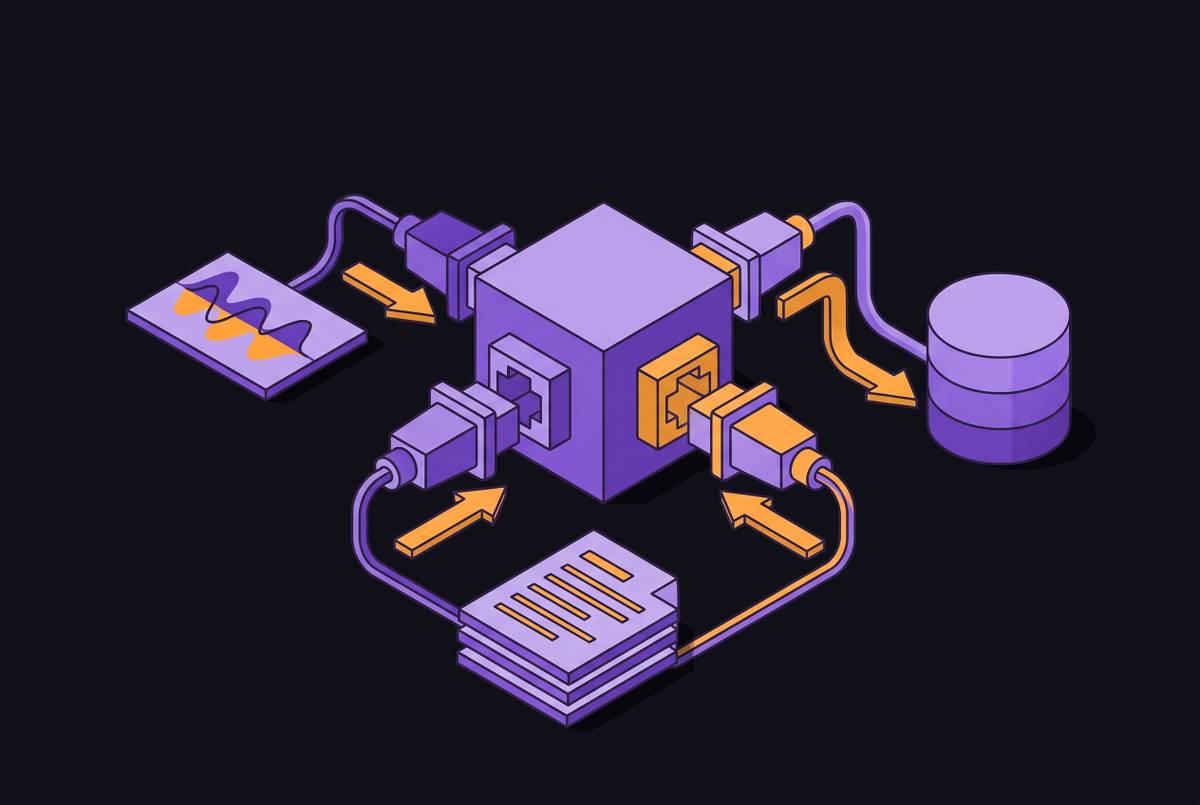
The foundational decision is to keep the HTTP endpoint nearly stateless and separate receipt from execution. The four-layer flow runs from the webhook endpoint to an event queue, then through a router to a downstream agent or worker. A dead-letter queue holds events that still fail after all their processing attempts. At the endpoint, the work is limited to verifying the signature, enqueueing the raw event, and promptly returning 200 OK. For HMAC deliveries, verification happens before payload parsing.
Everything that depends on another service belongs in a worker. That includes retrieving a full transcript, calling a CRM API, posting to Slack, or writing action items to a project tool. An integration that sends Circleback action items to Linear or Asana inside the incoming HTTP request couples acknowledgement to the availability of that destination. If the downstream response is slow, the provider can then retry even though the task write succeeded. The queue separates those failure domains, while idempotency and ordering tolerance address the correctness of the resulting writes.
Redis with BullMQ, AWS SQS, and managed queue services are implementation options. The important boundary is between accepting an event and completing its business effect. That boundary also absorbs the burst after a meeting, when transcript, action-item, and summary notifications can arrive within seconds of one another. Workers can process that fan-out without keeping the sender’s HTTP connection open.
Idempotency and preventing duplicate processing under at-least-once delivery
With at-least-once delivery, receivers need to handle duplicates as part of their normal work. In meeting workflows, the failure is visible as a second CRM activity, duplicate project tasks, or another Slack message about the same call. A customer may even get the same follow-up twice. These are not merely untidy records, because they make users question whether the integration can distinguish a new commitment from an old one.
The receiver needs an idempotency key derived from the provider’s event ID or a hash of event type, meeting ID, and timestamp. It checks that key in a fast store such as Redis or a database with a unique index before allowing duplicate work to proceed. An atomic write claims the key before processing begins, preventing concurrent deliveries from both passing the check. When a delivery has already been handled, the receiver sends a successful acknowledgement without doing the work again. This deduplication must remain distinct from the legitimate retries of processing that has not yet succeeded.
Key retention has to cover the provider’s retry window. OpenAI’s documentation states that delivery attempts continue for up to 72 hours with exponential backoff, so its keys must survive at least that long. When each notification prompts a check of current state, less depends on the order in which notifications arrive. Within the signature freshness window, deduplication provides a further defence against a valid delivery being replayed to repeat an action.
Retry logic and exponential backoff without overwhelming downstream systems
A CRM API, project tool, or Slack can be temporarily unavailable when a worker reaches it. The correct response to that transient failure is exponential backoff with jitter. The wait before each retry is longer than the last, usually twice as long, and random variation keeps workers from all retrying at the same time.
The distinction matters when many meetings finish close together. If their action-item workers all encounter the same outage and retry at fixed intervals, they return to the recovering service in synchronized waves. This thundering herd can keep a service overloaded long after a brief outage. Backoff gives the downstream service time to recover while the meeting events wait for it.
Not every error deserves another attempt. A CRM API response of 503 is transient, while a 400 caused by a malformed payload or missing required field will not improve through waiting. Invalid transcript objects should go straight to the dead-letter queue without using up the retry budget. The consumer’s retry window also needs to fit the sender’s delivery policy. If a platform retries for 24 hours, consumer retries and deduplication must work within that budget without allowing provider redelivery to start a competing processing chain.
Dead-letter queues and preserving events that exhaust all retries
After a configurable number of attempts, the event moves to a dead-letter queue. That queue preserves the original payload, the final error, and the timestamp of each attempt. Together, those records provide the context needed to understand the failure and recover from it. Invalid events routed there directly remain available for the same inspection.
The business meaning is concrete for a sales professional or customer success manager. A failed event may represent an unassigned action item, an unsynced CRM record, or a follow-up that never went out. If a CRM integration is misconfigured for a week, the dead-letter queue preserves the affected sync events for bulk reprocessing after the configuration is corrected. Without that way to recover, the missed work stays undone even after the connection is fixed.
Events can be inspected manually, reprocessed automatically after the underlying fault is resolved, or escalated through an alert. The queue itself is therefore only part of the pattern. Alerts on its depth, a view of failing event types, and logs identifying the downstream system returning errors make the backlog actionable.
How can meeting action items reach Linear and Asana through event-type routing
Once delivery and recovery are reliable, routing determines where each result belongs. Those destinations do not all need the same meeting output. A type-based router inspects each event at the queue consumer and dispatches it to the appropriate handler or agent. This keeps handlers small, testable, and independently deployable rather than turning the integration into one growing conditional block.
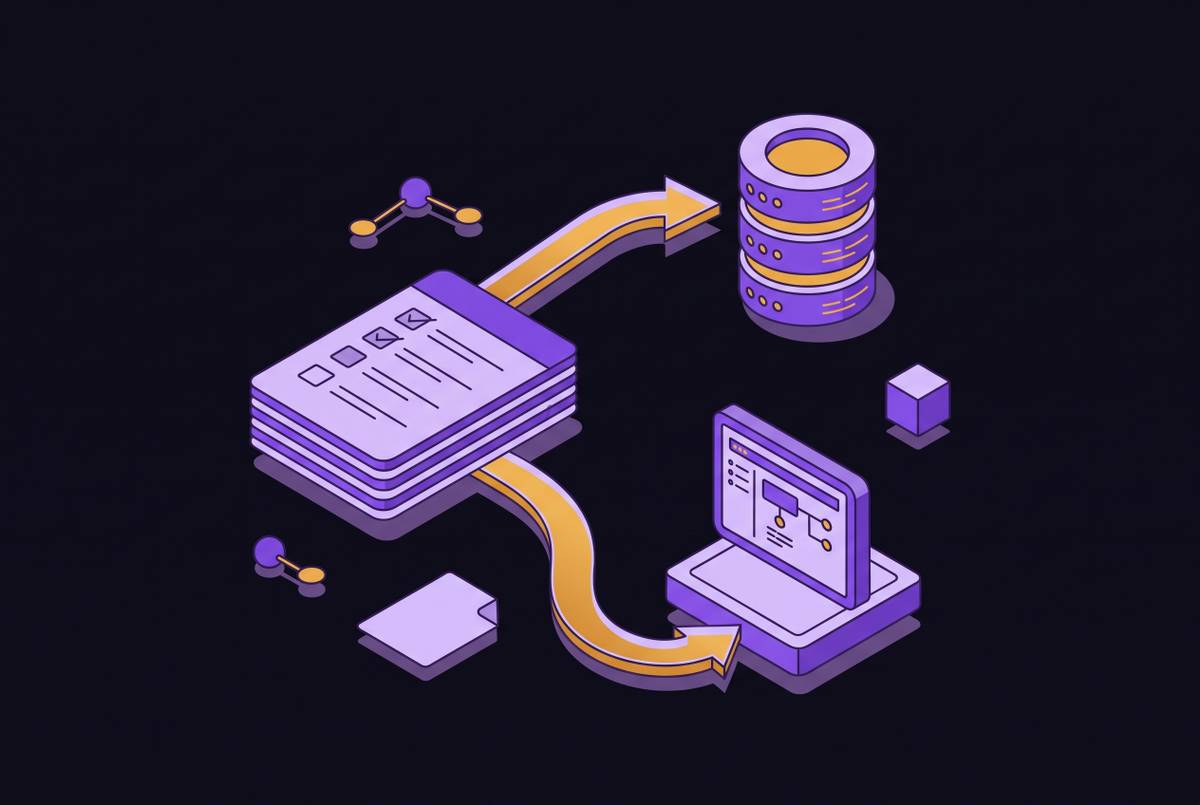
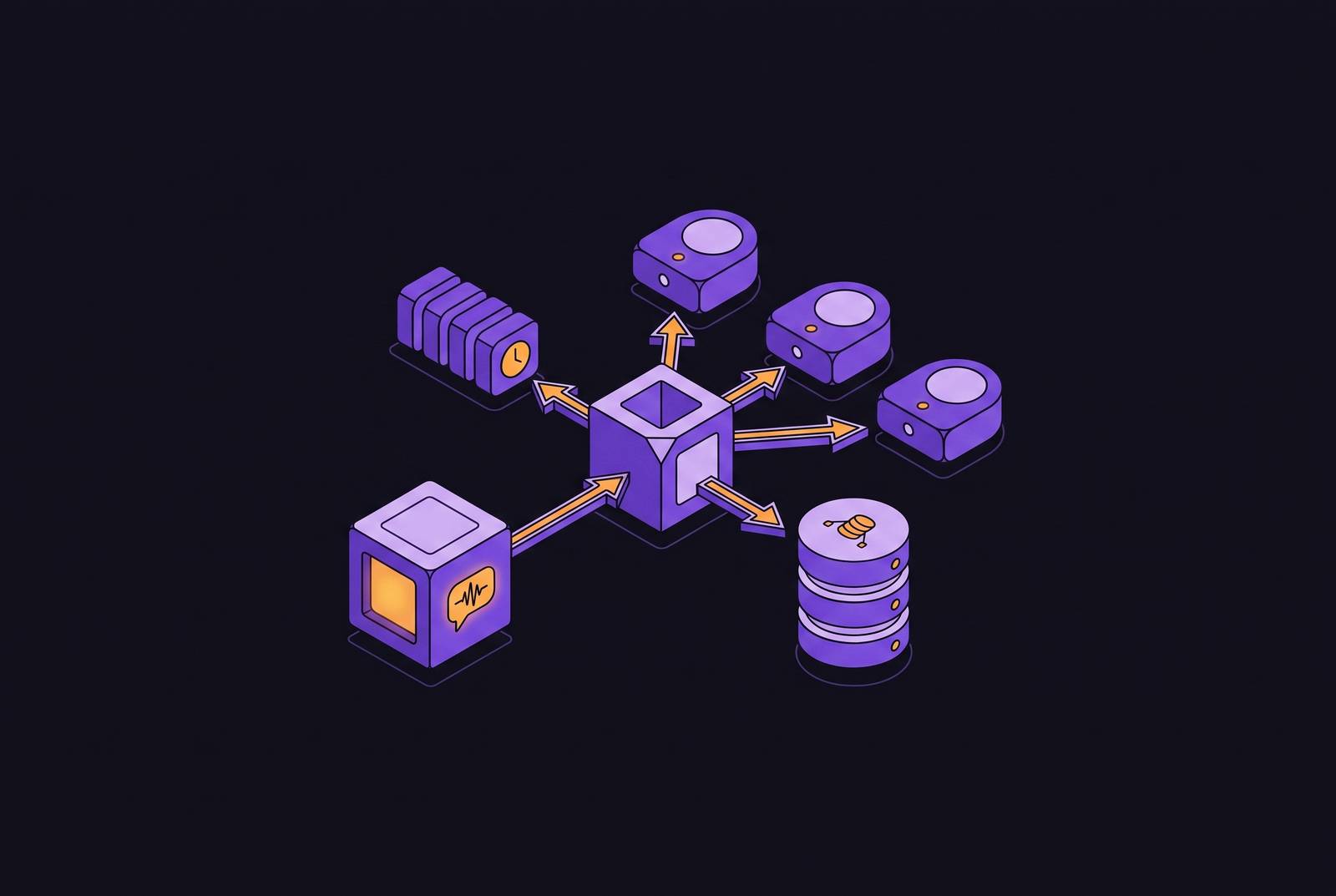
The event taxonomy supplies the routing contract. meeting.ended can create the CRM meeting record, open the activity, and start the clock on transcript availability. transcript.ready belongs with consumers of raw text, such as a vector store, knowledge base, or archive. action_items.extracted routes commitments to Linear, Asana, or CRM task objects, replacing manual transfer with tracked deliverables. summary.published serves Slack, email, and CRM activity notes.
The router also manages legitimate fan-out. One summary event may need both a Slack notification and a CRM write, without requiring the source to know each destination. Schema evolution belongs at this event-type boundary. An additive v2.action_items.extracted schema can introduce confidence scores or speaker attribution without forcing every other handler to change.
Security requirements specific to meeting intelligence payloads
A full transcript can hold participant names, business commitments, and strategic context, which some of those who get the notification do not need. Sending only an event type and resource ID keeps that content out of the delivery itself. The worker retrieves the full object through an authenticated API call under the platform’s access controls. Circleback’s stated position that privacy and security are foundational makes this boundary relevant to the integration design and the product’s storage practices.
HMAC verification must precede payload parsing, and timestamp-based freshness checks apply where the provider supplies a signed timestamp. Providers such as Stripe and Slack use a roughly five-minute freshness window to guard against later replay, but some major providers leave out a signed timestamp. The receiver must follow the provider’s signing contract, since these protections vary from provider to provider.
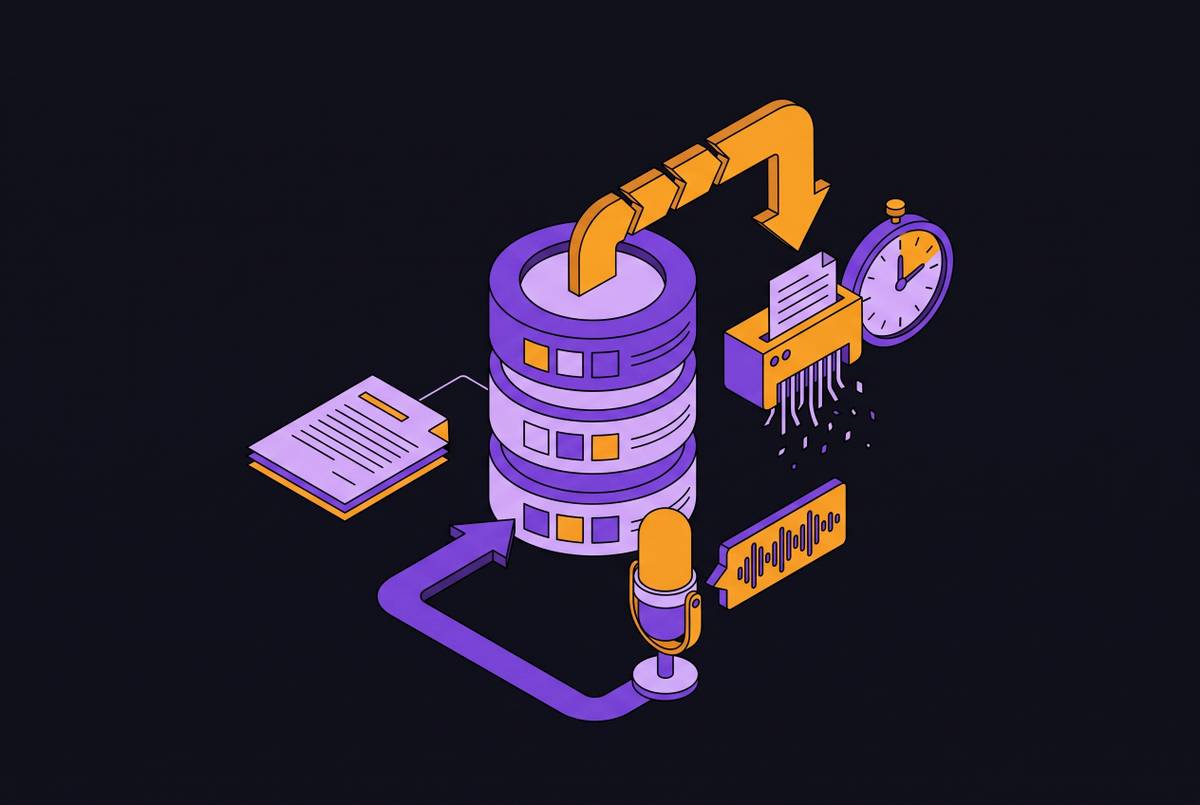
Meeting platforms, including Circleback, should be evaluated on thin versus fat payloads, signing scheme, retry window, and the availability of delivery logs or programmatic replay. These criteria connect privacy to recoverability. Delivery logs themselves also need attention under GDPR or CCPA. If logs keep full payloads with names and conversation content, how long they are kept and who can access them may need to follow the organization’s data handling policies.
Observability and the feedback loop that makes the pipeline debuggable
An action item may still be waiting to reach its destination after a successful HTTP acknowledgement. Event-level observability must show whether the notification arrived, passed signature verification, and was correctly discarded as a duplicate or accepted for processing. A queue consumer trace then identifies which worker picked it up and when. Worker execution logs show whether the downstream call succeeded and record the error if it failed. Dead-letter queue inspection completes that chain by showing where unresolved events went and why.
Alerting turns those records into an operational feedback loop. Rising dead-letter queue depth signals a class of unresolved failures, while increased signature failures can indicate secret rotation without a receiver update or delivery tampering. Increased idempotency collisions warrant checking whether the endpoint is returning non-200 responses and prompting redelivery. Programmatic replay endpoints, available from Stripe, GitHub, Shopify, and PayPal, make recovery a scripted operation against a delivery log. Circleback’s API, webhooks, and MCP connector surface give teams a way to connect meeting events to their existing monitoring stack.
These signals explain individual failures, but the closing measure is end-to-end latency. The clock for that measure starts at meeting.ended and runs until extracted action items are synced to the CRM or project tool. It spans AI processing, delivery, queueing, retries, and downstream execution. The outcome these patterns protect is the time between a meeting ending and its commitments appearing in the right tool.