Sentiment and Tone Analysis in Sales Call Intelligence
Accurate tone detection during calls reveals buyer hesitation words alone would miss.
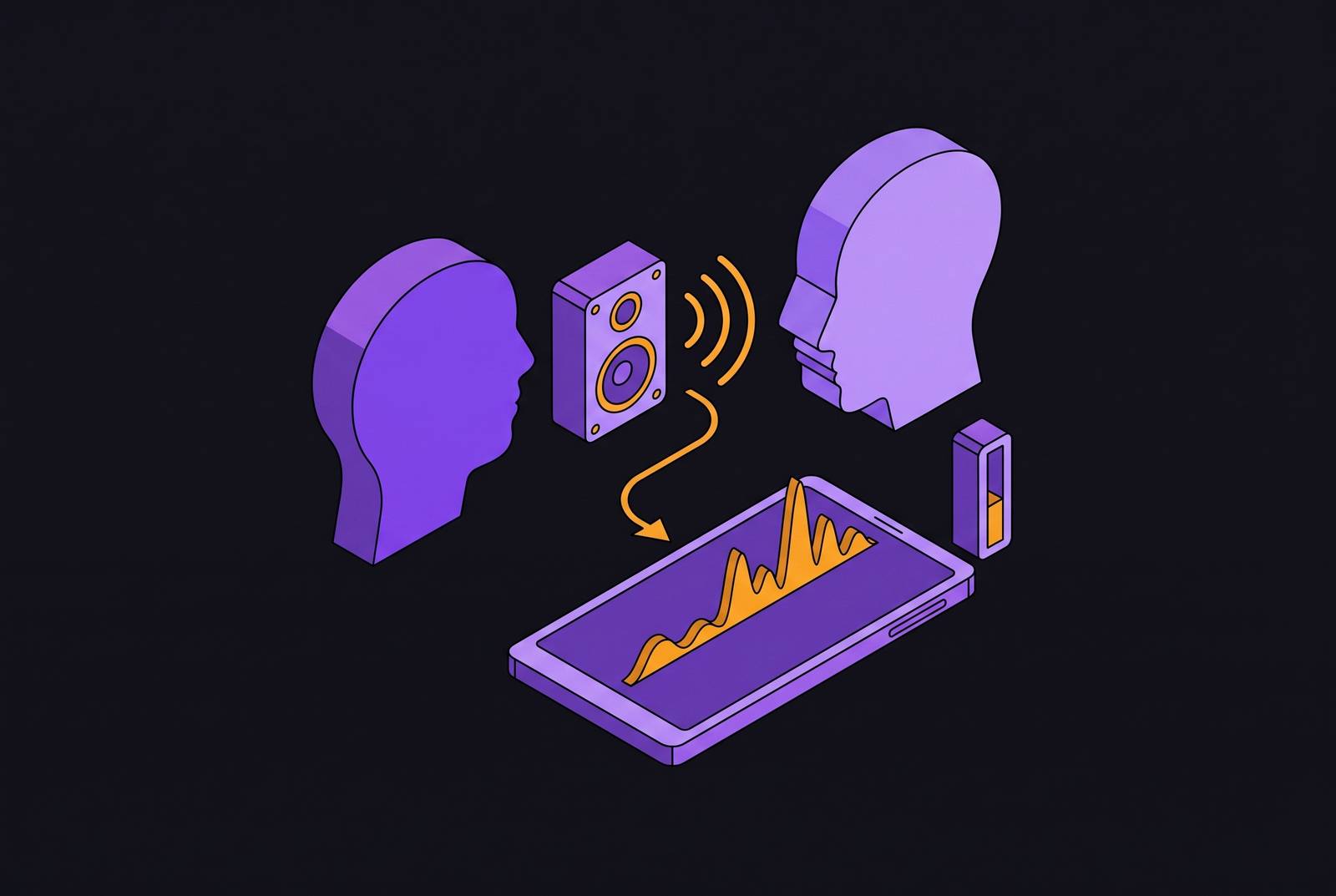
Sentiment and tone analysis in sales calls works by reading how a buyer sounds against what a buyer says, then scoring the gap between the two. The technology matters only as far as three things hold up: how accurately it captures the signal, how fast that signal reaches someone who can act on it, and what a team actually does once it arrives.
What sentiment analysis in sales calls measures
A buyer says "sounds good" and "we'll review internally." On paper, that's a clean, mildly positive close to a call. Reading the transcript alone leads a rep to log it as a warm lead. But strip out the words and listen to the pitch, the pace, the flatness in the delivery, and a different conversation appears in the audio, one where the buyer has already mentally exited. That gap between text and tone is what sentiment analysis in sales calls is built to catch.
The technology doesn't claim to read minds. It decodes behavior: word choice, vocal pitch, pace, interruption patterns, and emotional tone, all of which correlate with how someone actually feels in the moment, not with what they intend to signal. The output is a read on the buyer's real-time emotional state, separate from any verdict about their psychology. It's a structured score, tracked continuously through the call rather than tallied once at the end, with the rep and the prospect scored on separate channels. Blend those two scores together and the most useful signal disappears: the moment a rep stays upbeat while the buyer visibly cools.
Polarity scoring, positive, neutral, or negative, is the baseline layer here. More advanced systems go further, adding fine-grained emotion detection for joy, frustration, hesitation, and confusion, plus aspect-based sentiment analysis, which ties sentiment to a specific topic rather than the call as a whole. Aspect-based sentiment analysis separates how a buyer feels about the product from how they feel about pricing or support, so a rep can see which specific topic is souring a deal instead of getting one blended score for the whole call.
The system has to read two separate streams: linguistic content, meaning words, negation, sarcasm, and context, and paralinguistic content, meaning pitch, volume, pace, and prosody. They are distinct signals, and they have to be read together, because either one alone tells an incomplete story. "That's great," said in a flat, affectless voice, is a negative signal dressed as a positive one, and any system reading only the transcript will get it backward.
Why two data streams are better than one: the text-plus-acoustics architecture
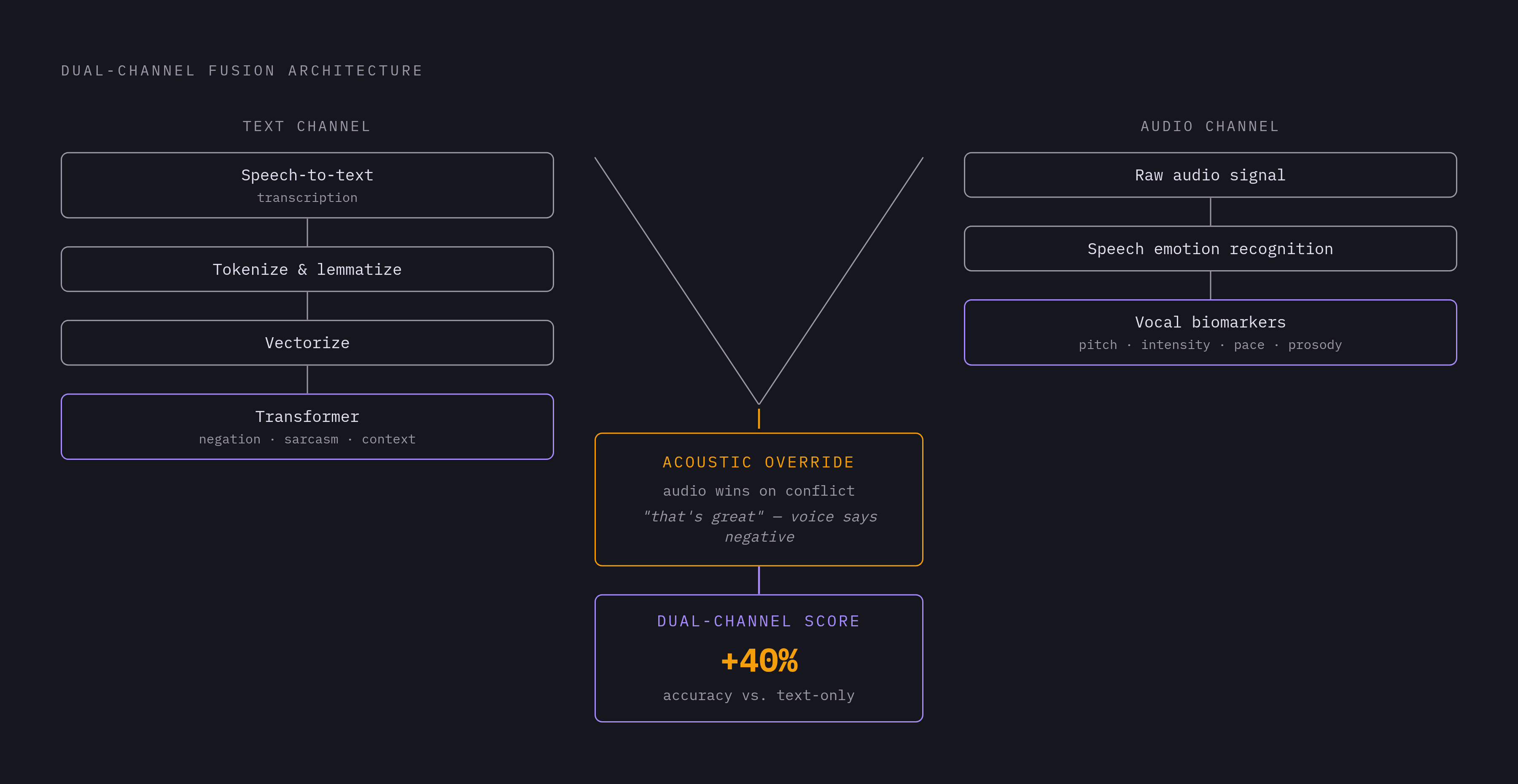
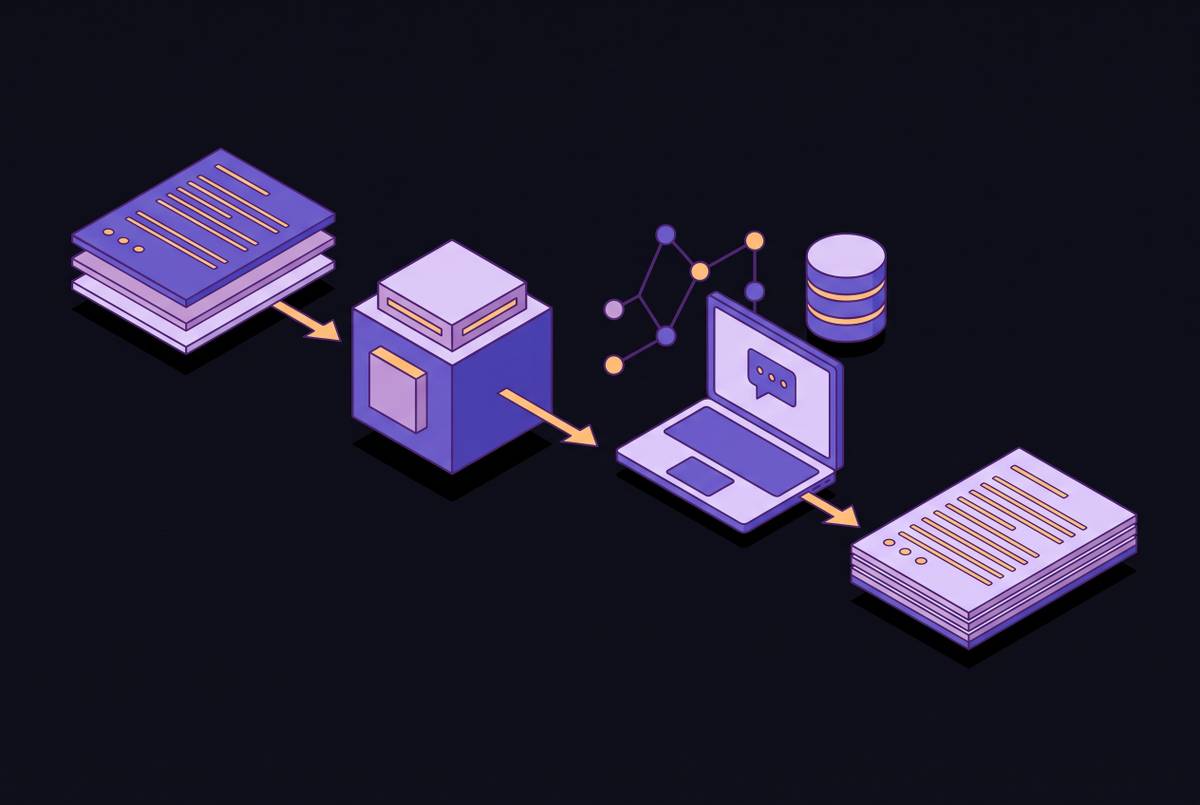
The real technical advance in this field isn't better transcription. It's fusion, the practice of running natural language processing on the transcript and speech emotion recognition on the audio, then combining the two outputs so each resolves what the other misses.
The text pipeline starts with speech-to-text transcription, then runs through tokenization and lemmatization (breaking language into units and reducing words to their root forms), then vectorization, which converts that text into numbers a model can process, and finally into transformer-based deep learning that can capture negation, sarcasm, and context. That's a lot of steps, but the point of all of them is the same: turn words into something a model can reason about statistically.
Running in parallel, a second system does speech emotion recognition, pulling vocal biomarkers straight from the audio signal itself, pitch, intensity, pace, prosody, independent of whatever words were actually spoken. Then comes the fusion step, where the two outputs get combined so that, when what's said contradicts how it's said, the acoustic signal wins. This mechanism produces the flat-toned "that's great" example: the words say positive, the voice says otherwise, and the system is built to trust the voice.
The performance gap this produces isn't marginal. Dual-channel engines that fuse text with acoustics outperform text-only models by roughly 40% in sentiment accuracy, a figure reported by Kixie and corroborated separately by Runo. Text-only analysis isn't worthless, and transcription accuracy in English has become close to a commodity across leading tools at this point. But a transcript alone will never catch a sarcastic "interesting," and it will never catch the half-second hesitation before a buyer answers a pricing question. It also depends on having something to fuse in the first place: separate audio channels for the rep and the buyer. A single blended mono recording collapses that distinction and, with it, most of the value the fusion step is designed to produce.
What transcription quality does and does not determine
A wrong transcript produces failures throughout the fusion architecture, no matter how sound its design: every downstream output depends on the transcript being accurate. Transcription accuracy is the floor the entire system stands on, and it's non-negotiable: a bad transcript corrupts the sentiment score, the summary, and every action item built on top of it.
Consider what happens when a notetaker mishears "Dr. Ramirez about the Q3 projections" as something close but wrong. The name is gone, the context is gone, the quarter is gone, and the resulting action item is functionally useless to whoever has to act on it. That single mishearing doesn't just create a small inconvenience. It erases the specific, actionable detail that made the note worth having.
The good news is that this floor has risen substantially. Leading tools now hit high accuracy rates on clean English audio. The catch is that "clean" is doing a lot of work in that sentence. Multi-speaker calls with crosstalk still see meaningfully lower accuracy in hands-on testing, and accuracy on technical vocabulary, proper nouns, regional accents, and non-English languages remains genuinely uneven across tools. So transcription is a mostly-solved problem rather than a fully solved one, and the remaining edge cases are exactly where deals get lost.
Some will argue that if average transcription accuracy is commoditized, tool choice at that layer stops mattering. That argument misses the variance hiding inside the average. A model that performs well on average English audio can still fail badly on the edges, crosstalk, accents, jargon, and one misheard commitment on a six-figure deal is not a rounding error. The floor has to hold because a bad transcript corrupts the sentiment score, the summary, and every action item built on top of it. The rest of the system, everything built on top of transcription, has become the actual site of competition among tools.
How sentiment scores become coaching moments before the call is forgotten
Once the floor holds, sentiment scoring earns its keep by changing what a manager reviews and how fast. The value isn't retrospective reporting. It's a ranked map of which calls need attention and which minute inside each call actually matters.
Without sentiment data, call review amounts to sampling. A manager listens to a handful of calls a month, picked somewhat arbitrarily, and hands out anecdotal feedback that doesn't scale and carries whatever bias that manager brings to the sample. Sentiment scoring changes the starting point entirely. Every call gets a quality score, out of 100 in Runo's model, weighted across sentiment, filler words, talk ratio, loudness, and compliance, so a manager sees the shape of the whole team's week before opening a single recording.
That score also catches what checkbox audits miss. A compliance checklist that comes back all green on a call where the customer went negative starting at minute two is handing out a false clean bill of health, and sentiment tracking is what exposes that gap. Continuous tracking through the call flags the exact minute a buyer's tone shifted. A manager can then skip straight to that segment instead of listening from the start.
That specificity is what turns a vague note into usable coaching. "Sound more confident" tells a rep almost nothing. "At minute three, right after you mentioned pricing, the buyer's pace slowed and their tone flattened, and here's what your top performers do differently in that exact spot" tells them what to change and why. New reps benefit from the same mechanism in reverse: calls with strong positive sentiment become study material, a way to hear what good sounds like instead of shadowing calls and guessing at what made them work. Some platforms push this further into real time, surfacing tone or pace alerts while the call is still happening rather than waiting for a debrief. Either way, the score is a pointer that tells a manager where to look, while the judgment still belongs to a human who knows the account. It tells a manager where to look. The judgment still belongs to a human who knows the account.
Using sentiment signals to catch at-risk deals before the CRM shows it
Zoom out from a single call to a sequence of them on the same deal, and sentiment trends reveal risk in the emotional trajectory across calls before it becomes visible in any CRM field.
Activity metrics, dials, connects, meeting counts, are lagging indicators. A deal looks perfectly active in the pipeline right up until it goes quiet. Sentiment trends track the emotional trajectory of the relationship across calls. A deal where buyer sentiment is neutral or drifts negative across successive follow-ups is cooling well before it shows up as a stalled stage in the CRM, and a manager who catches that early can intervene with a change in strategy or pull in executive support before the deal goes silent for good.
The same trend line runs in the other direction. A buyer who's been steadily neutral and suddenly turns positive the moment a new product area comes up has handed the team an upsell cue to act on immediately, not next quarter. Aspect-based sentiment analysis sharpens both signals by attaching them to a specific topic rather than the call overall. A buyer who is positive about the product but consistently negative when pricing comes up is not the same risk profile as a buyer who is uniformly disengaged, and the intervention is different. Kixie reports that real-time negative-sentiment alerts, by flagging a call for immediate follow-up instead of waiting for the next scheduled touchpoint, cut churn by 31 to 44%.
None of this amounts to reading a buyer's mind. A frustrated tone might reflect a buyer's own internal chaos, a budget fight three levels up, nothing to do with the rep or the product at all. The honest claim here is narrower and more useful: sentiment data flags the segment worth a human's attention, and the manager brings the context that decides what it means. Sales leaders who track sentiment by deal, rep, and segment over time get closer to what Kixie calls emotional forecasting, a directional read on pipeline health that goes deeper than deal stage alone, though it's a signal to weigh, not a number to trust blindly. What a manager does with a flagged deal, a call, a conversation with the rep, a nudge to bring in someone senior, is where the actual save happens.
Why sentiment data is only as useful as the workflow it feeds
A sentiment score sitting in a dashboard nobody opens has done nothing. The entire value of this technology depends on how fast the insight reaches the place where work actually gets done, and for most sales teams, that place is the CRM.
The failure mode here is well documented and unglamorous. Reps burn a large share of their non-selling hours on manual CRM entry, and a meaningful share of them don't keep the CRM updated consistently regardless, which leaves records incomplete and forecasts built on sand. Asking a rep to manually copy sentiment highlights and action items into Salesforce or HubSpot after every single call means most of that copying simply won't happen, or it'll happen inconsistently enough to make the aggregate data unreliable.
Deep CRM integration is what separates tools that solve this from tools that don't. The strongest ones create contacts, update deal stages, log sentiment signals, and capture action items automatically, rather than dropping a transcript link into a notes field and calling it done. A tool with a wide native integration library, pushing meeting insight into Salesforce, HubSpot, Slack, Asana, and Notion, is automating work that most sales teams still do by hand. Some platforms go a layer further by contextualizing the sentiment score itself against outside firmographic data, so the same score carries different weight depending on company size, industry, or deal type.
An emerging tier of tools pushes past integration into autonomy outright. These platforms position themselves not as transcription apps but as agents that manage the entire workflow end to end, updating structured qualification fields like BANT or MEDDIC and triggering follow-up sequences without a manual review step in between. That stands in contrast to tools built primarily around strong transcription, which still require someone to review and enter data into the CRM by hand, a real distinction for any team running high call volume. Features that convert a detected signal directly into a task, Runo's Key Questions feature turns an unanswered customer question into a structured follow-up item, are the actual bridge between insight and action. The broader pattern is the same across every serious tool in this category: connect to CRMs like HubSpot, Salesforce, and Attio, project tools like Linear and Asana, and communication tools like Slack, and skip the manual routing step entirely.
How call intelligence data becomes searchable organizational memory
Extend that same logic past a single deal and a different asset starts to form. A searchable archive of scored, transcribed calls becomes one of the richest sources of context a sales team owns, capturing what messaging worked, what objections kept recurring, and what buyers actually said, in language no CRM field or pipeline stage will ever hold.
That matters most at the two moments teams usually feel it least prepared for: when a top performer leaves, and when a new hire starts. A rep's feel for handling a pricing objection, the specific phrase that moved a buyer from neutral to positive, doesn't have to walk out the door anymore if the calls behind it are transcribed and tagged. By around six months, a team has built a searchable library of hundreds of calls, and by the twelve-month mark, new hires are ramping faster by listening to actual calls rather than reading a wiki or relying on secondhand coaching notes.
The tagging is what makes the archive searchable rather than just large. Instead of scrolling through a pile of recordings, a manager can search specifically for calls where pricing sentiment turned negative early, and get back a precise, filterable slice of the archive rather than a haystack. At scale, that same search capability starts revealing patterns no individual call review would ever surface: which openers reliably shift sentiment positive, which competitor mentions trigger frustration, which buyer personas respond to which pitch. That's not a coaching tool anymore. It's a messaging research tool, built entirely out of exhaust the sales team was already producing.
Connecting call sentiment data to LLMs and AI assistants via MCP
The natural extension of that archive is making it queryable by the AI systems reps and managers already use for everything else. A call archive tagged with sentiment, topic, and outcome data is genuinely valuable sitting still.
The mechanism is straightforward in concept: MCP gives an AI assistant a standardized way to reach into a structured data source, in this case a call archive, and pull back exactly the slice it needs to answer a question. A manager preparing for a deal review could ask an assistant to identify the specific opener, question, or talk track that consistently correlates with sentiment turning negative and get a synthesized answer instead of listening to calls end to end. A rep prepping for a renewal could ask what objections a buyer has raised historically and get an answer built from that buyer's actual words, not from institutional memory that may or may not be accurate anymore.
This is where the earlier arguments in this piece stop being separate points and start compounding. If transcription accuracy is poor, the underlying record cannot be trusted. Without fusion-based sentiment scoring, that record captures what the buyer said but not how they felt. Without workflow integration, that scored, tagged data never leaves the call platform in the first place. And MCP, or whatever protocol ends up standard, lets an AI assistant reach that data at the moment someone actually needs it, rather than requiring someone to remember it exists and go looking. None of those layers is optional.